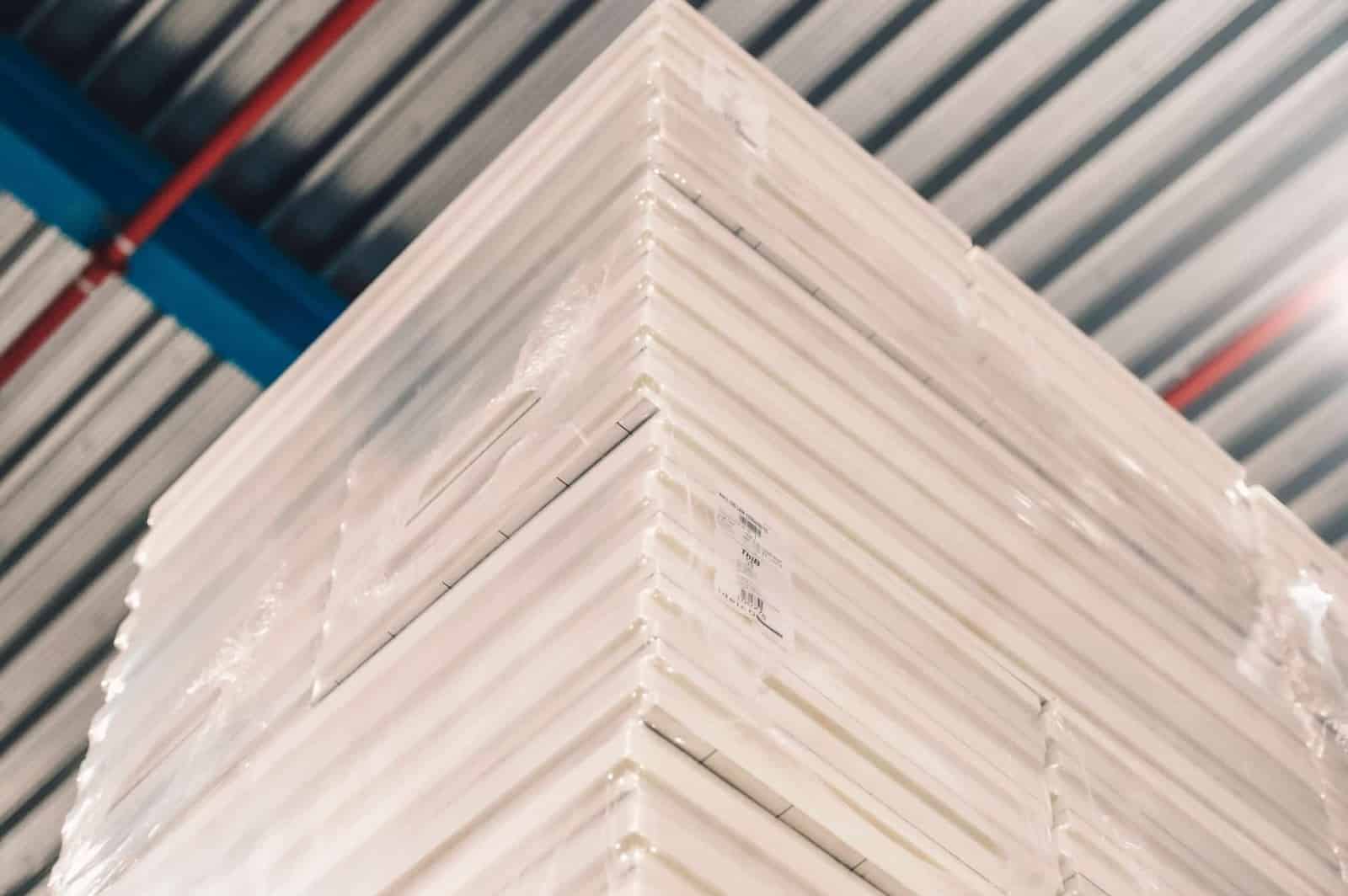
Do you want to insulate your floor yourself and save on energy costs? A well‑insulated floor prevents heat loss and cold feet. In this guide, you’ll discover how to efficiently insulate your floor, which insulation material to choose, and what to pay attention to.
Why insulate your floor?
An uninsulated floor causes energy loss, cold drafts, and higher energy costs. Up to 10% of the heat in a home can be lost through the floor. This makes floor insulation a smart investment, not only for comfort but also for your wallet.
Floor insulation also helps regulate moisture in the home. Especially in houses with a crawl space, rising damp can lead to condensation, causing wood rot, mould, and a musty smell. By installing a vapour‑barrier membrane and an insulation layer, your floor stays dry and the lifespan of your home is extended.
In addition, a well‑insulated floor contributes to a more sustainable home. Less heat loss means lower CO₂ emissions and a smaller ecological footprint. This benefits not only your energy bill but also the environment.
Overview table: suitable floor insulation per situation
Situation | Floor type | Method | Recommended materials | Notes
Accessible crawl space | Concrete | From below | – PIR / PUR boards
– Thermal cushions | Easiest option. Fix boards with plugs/screws
Non‑accessible crawl space | Concrete or wood | From above | – PUR / PIR / EPS boards
– Insulating underlay | Limited build‑up height? Choose thin boards with high Rd‑value
No crawl space and no demolition desired | Concrete or wood | On existing floor | – Thin insulation boards + floor finish (laminate, vinyl) | Watch out for height differences and doors
Extra selection criterion
With limited height: use PIR (best insulation value per cm)
Step 1. Choose your method: underside or topside
When insulating your ground floor yourself, you first need to decide how to approach it: from below or from above. Both methods have advantages and disadvantages. The right choice mainly depends on the structure of your home and accessibility.
1. From below (via crawl space or basement)
This is the most common and easiest method, provided you have an accessible crawl space of at least 45 cm high. You fix insulation material (such as boards or blankets) to the ceiling of the crawl space — the underside of the floor.
Advantages
- No demolition work
- Existing floor remains in place
Disadvantages
- Only possible with an accessible crawl space
- More difficult if many pipes are present
2. From above (breaking open the floor or insulating on top)
If there is no crawl space or it is inaccessible, you can insulate from above. This involves removing (part of) the existing floor and installing insulation on the subfloor, followed by a new floor finish.
Advantages
- Applicable everywhere, even without a crawl space
- Opportunity to renew the floor
Disadvantages
- More work and dust
- Higher cost and possible issues with doors, thresholds, and skirting boards
- Less suitable with limited build‑up height
Which method should you choose?
Situation | Method
Accessible crawl space present | Insulate from below
No crawl space or < 45 cm high | Insulate from above
Full floor renovation planned | Insulate from above
Limited build‑up height | Insulate from below or use thin boards from above
Many pipes in crawl space | Consider spray insulation (by a professional)
Step 2. Choose the right insulation material
Not every insulation material is suitable for every floor or situation. Floor type, insulation method, and available space all play a role. Choosing the right material maximises energy savings, comfort, and durability.
Most commonly used insulation materials
Material | Advantages | Application | Rd‑value
PIR boards | High insulation value, thin, pressure‑resistant, moisture‑resistant | Concrete & wood, above & below | Rd ≈ 4.5 at 10 cm
Mineral wool | Vapour‑open (ideal for wooden floors), flexible, good acoustic insulation | Wooden floors, only from below | Rd ≈ 3.5 at 13 cm
What about insulating a concrete floor yourself?
If you want to insulate a concrete floor, you have more freedom in material choice. For maximum insulation with minimal thickness, PIR boards are ideal: thin, pressure‑resistant, and with a high insulation value. They are easy to install and walkable, which is convenient when insulating from above.
What if build‑up height is limited?
When space is limited (for example when insulating on top of an existing floor), choose a material with a high insulation value per centimetre. PIR clearly stands out here: with 6 cm of PIR, you already achieve an Rd‑value of more than 2.5, while mineral wool quickly requires 10 to 13 cm for the same result.
Summary: what should you choose?
Your situation | Recommended material | Why
Concrete floor with limited height | PIR boards | Thin, high Rd‑value, easy to install
Wooden floor with moisture risk | Mineral wool / thermal cushions | Vapour‑open, prevents wood rot
Well‑accessible crawl space | PIR boards or thermal cushions | Quick installation, high insulation value
Step 3. Step‑by‑step plan per method
Depending on your home and floor structure, you choose insulation from below or from above. Below you’ll find a practical step‑by‑step plan for each method, including useful tips.
A. Step‑by‑step plan for insulation from below (crawl space insulation)
If your crawl space is easily accessible and at least 45 cm high, insulating from below is the easiest, fastest, and cleanest method. You install insulation against the ceiling of the crawl space (the underside of the floor above).
- Check accessibility & moisture
- Measure crawl space height
- Check for water or moisture problems
- Prepare the crawl space
- Clear the space
- Remove sharp objects from the ground
- Optionally install a vapour‑barrier PE foil on the ground
- Seal gaps and insulate pipes
- Seal gaps with mineral wool or PU foam
- Insulate heating pipes (not water pipes)
- Install the insulation material
- PIR boards are ideal for DIYers
- Cut to size, fix with plugs or insulation screws
- Ensure tight joints, avoid gaps
- Insulate the crawl hatch
- Fix insulation to the inside of the hatch
- Seal gaps with draught strips or EPDM tape
Points of attention
- Ensure sufficient crawl space ventilation (min. 4 vents)
- Use protective equipment with fibrous insulation
- For wooden floors: use only vapour‑open materials
B. Step‑by‑step plan for insulation from above
- Determine build‑up height
- Measure available space between subfloor and doors
- Choose insulation based on required thickness and insulation value
- Remove existing floor finish
- Remove tiles, parquet, or laminate
- Check subfloor for moisture, cracks, or loose parts
- Install a moisture barrier (if needed)
- Use PE foil on concrete subfloors
- For wooden subfloors: only vapour‑open materials
- Install the insulation
- PIR boards are ideal with limited build‑up height
- Ensure tight‑fitting boards
- Finish joints with tape or PU foam
- Install the new floor finish
- Ensure a level base (use a levelling compound if needed)
- Install the new floor (laminate, parquet, tiles, etc.)
Extra tips
- Use PIR boards of 2 to 6 cm for high performance with minimal thickness
- Avoid thick materials like mineral wool when height is limited
- Account for door openings, skirting boards, and thresholds
Common mistakes to avoid
Before insulating your floor yourself, there are a few common mistakes that can seriously undermine the final result.
1. Ignoring moisture
Mistake: Installing insulation on a damp subfloor or in a wet crawl space without protection. This can cause mould, wood rot, or reduced insulation performance.
How to avoid it:
- Always check floor moisture (wood: < 20%)
- Install PE foil on crawl space ground against rising damp
- With heavy moisture: use drainage or dimpled membrane
- Allow wooden floors to dry thoroughly
2. Poor fitting or open gaps
Mistake: Insulation boards that don’t fit tightly, allowing heat loss and cold bridges.
How to avoid it:
- Cut boards precisely to size
- Seal joints with insulation tape or PU foam
- Secure blankets/wool firmly between joists
- Check edges around walls and pipes
3. Insufficient ventilation
Mistake: Sealing crawl space ventilation openings to prevent draughts. Result: trapped moist air, leading to mould and condensation.
How to avoid it:
- Provide at least 1 cm² ventilation per m² floor area
- Install a minimum of 4 vents (2 front, 2 rear)
- Keep vents clear of debris
- Don’t over‑seal: insulation ≠ airtight sealing
Avoiding these mistakes ensures maximum benefit and prevents long‑term issues.
Insulating your floor yourself or hiring a professional? Costs and savings
DIY may seem cheaper at first, as you avoid labour costs. However, keep in mind that DIYers pay 21% VAT, are not eligible for subsidies, and bear full responsibility for materials, transport, and errors.
Cost comparison
DIY | Professional
Material cost | Full price + 21% VAT | Professional purchase price + 6% VAT
Labour cost | €0 | €15 – €30 per m²
Warranty & quality | None | Yes
Tax benefits | None | Often available
Duration | Several days | 1–2 days
Error margin | Possible | Low
Hiring a certified professional often gives access to:
- Reduced 6% VAT (homes >10 years old)
- Mijn VerbouwPremie (Flanders)
- Other regional/municipal subsidies
Frequently asked questions about floor insulation
Can I insulate my floor myself?
Yes, especially via an accessible crawl space.
How can I insulate my existing floor?
From below (crawl space) or from above (removal or build‑up).
What does 50 m² of floor insulation cost?
Request a tailored quote for PIR boards.
How many degrees warmer does an insulated floor feel?
Up to 3–4°C warmer.
Is 10 cm insulation enough?
Yes, with high‑performance materials like PIR.
Which insulation pays off the most?
PIR boards offer the best thickness‑to‑performance ratio.
Can you insulate too much?
In theory no, but moisture and ventilation must be considered.
Is floor insulation worthwhile?
Yes — less heat loss, more comfort, lower bills.
Best insulation against cold?
High performance per cm, such as PIR, installed airtight.
Can I insulate my attic floor?
Yes, attic floor insulation is ideal for unheated attics.
Conclusion
Insulating your floor yourself is achievable and can significantly improve comfort and energy efficiency. By choosing the right approach and materials, and avoiding common pitfalls, you can successfully complete this project.
Need advice or more information on suitable insulation materials for your project?
The Idelco team is happy to help. Contact us or request a non‑binding quote.